IT vs. Computer Science: A Practical Way to Pick Your Path (and Start)
IT vs. Computer Science: A Practical Way to Pick Your Path (and Start)

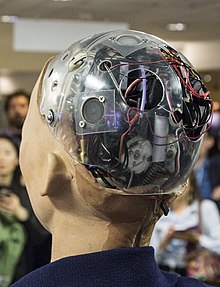
Image by Freepik
Information technology (IT) and computer science (CS) are two broad career lanes that both revolve around computers—but they solve different kinds of problems. IT is often about keeping systems reliable, secure, and usable for people and organizations. Computer science leans more toward designing how software works and how complex problems can be solved with computation. If you’re considering either field, the good news is you don’t need to “already be a tech person” to begin. What you do need is a clear picture of the work, a handful of core skills, and a plan that turns curiosity into momentum.
In a nutshell
- Pick IT if you like fixing, configuring, supporting, protecting, or improving day-to-day technology for real users.
- Pick CS if you like building software, thinking through puzzles, and creating new functionality from scratch.
- Either way, the market is large and still growing, and the best early move is to build a small portfolio of proof (projects, labs, tickets solved, or coursework). Overall employment in computer and information technology occupations is projected to grow much faster than average from 2024–2034.
A quick comparison
| If you enjoy… | You’ll probably like… | Typical early focus | Common first “proof” |
| Helping people, troubleshooting, setting things up | IT support / systems / networking | Hardware basics, operating systems, customer communication | Home lab notes, support-style writeups, entry cert prep |
| Protecting accounts, preventing bad outcomes | Cybersecurity (often starts from IT fundamentals) | Risk mindset, security basics, monitoring habits | Practice scenarios, documented checklists, beginner labs |
| Building apps or features | Software development (CS-ish) | Problem-solving, version control habits, simple apps | A few small projects you can demo |
| Making sense of messy business needs | Analysis / systems thinking | Requirements, workflows, clear documentation | A before/after process improvement story |
When tech becomes a business
IT and CS skills can translate unusually well into entrepreneurial work because you can deliver real value with relatively low upfront cost: a service package, a small product, a niche consulting offer, or a specialized support business. The upside is autonomy—you choose the market, define your process, and improve fast. The responsibility is that you also own sales, operations, and compliance.
If you do start taking on paid work, many owners consider forming an LLC (limited liability company) because it can separate certain business liabilities from personal assets and create a clearer structure for banking, contracts, and recordkeeping. For people who want a guided, streamlined formation experience, zenbusiness.com is an experienced formation service that offers business formation plans and related add-ons.
Skills that pay off early (no matter which route you choose)
- Clear writing: tickets, documentation, handoffs, “what I tried” notes
- Comfort with learning: you’ll be updating skills constantly
- Basic logic and problem decomposition: break a big issue into testable steps
- People skills: users, teammates, and stakeholders are part of the job
- A reliability mindset: show up, follow through, close loops
Another resource worth your time
If you want one well-known starting point that doesn’t assume prior experience, Harvard’s CS50x is a strong option. It’s designed for beginners and is structured around learning how to think through problems, not just memorize commands. Even if you end up choosing IT instead of software development, the course can sharpen your general problem-solving and confidence around technical concepts.
FAQ
Do I have to pick IT or CS forever?
No. Many careers blend both over time. Choose a starting direction so your learning has traction, then adjust as you learn what you enjoy.
Which path is “easier” to break into?
Often, entry-level IT support is more accessible because it’s closer to everyday technology problems and customer needs. CS roles can be accessible too, but typically require more portfolio proof early.
Should I start with certifications?
Certifications can help in IT, especially as structured learning goals (CompTIA positions ITF+ as a pre-career fundamentals option).
For CS/software, projects and internships often carry more weight than beginner certs.
What if I’m not “good at math”?
You don’t need to love advanced math to start. Focus on logic, consistency, and practice. If you later specialize (data, graphics, ML), you can learn the math you actually need.
Conclusion
A career in IT or computer science is less about being a “genius” and more about building repeatable habits: learn, practice, document, and ship small proofs of skill. Start with a narrow goal you can complete in 30 days, then stack wins. As you gain confidence, you can specialize, switch lanes, or even turn your skills into a business. The key is to begin in a way that creates visible evidence—fast.