“The Real Problem with Datacenters”
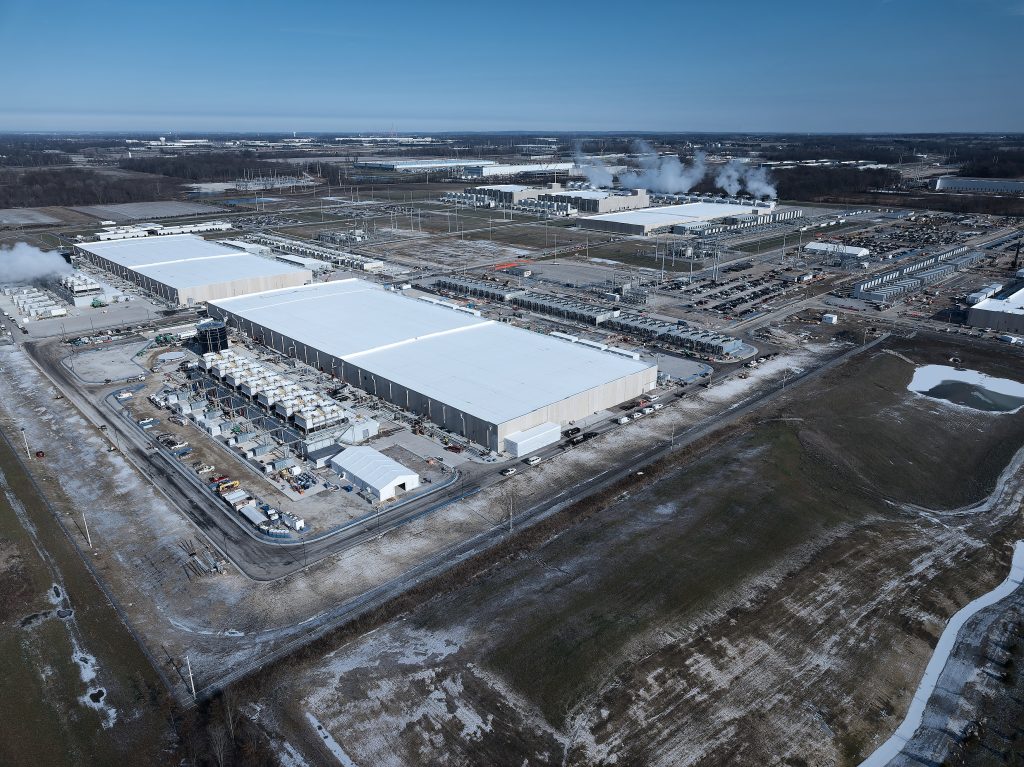
Photo by Google: Another aerial view of our New Albany, OH data center campus in Central Ohio focuses on Building 5, which is in the southwest corner of the campus and is under construction.
I have read a lot of concerning posts regarding the plans to build massive datacenters throughout the mid-west to support Artificial Intelligence and most of them are focusing on the impact to the water supply. While it is true that there can be a significant impact to the water supply it is not likely to be nearly as bad as the media would have you to believe. You see there are two different types of liquid based cooling in use in datacenters today. The first is what they refer to as adiabatic cooling, which is only useful in extremely dry climates, like the deserts of Arizona. The basic concept behind it is related to the temperature drop during the state change of water from liquid to gas. In these dry environments water evaporates quickly and rapidly cools the surface from which it evaporates. The adiabatic cooling systems consume the water they utilize for cooling, and they utilize it in great quantities.
The second type of liquid cooling in datacenters works off of the same concept as ground source heat pumps. They pump water from deep wells where the temperature is constant, around 65 degrees. The water is pumped in from one well and across a heat exchanger, where it balances the temperature of the water in the closed loop system of the datacenter with the cooler water from the well. The heat transfer process warms the well water to between 68-75 degrees depending on the current load on the datacenter. This warmer water is dumped back into another well, where it mixes with the ground water. No water is consumed using this cooling method and there is minimal risk to the environment as the slight rise in temperature is not enough to significantly increase the ground water temperatures.
So why are we being told the story about the risk to the water supply brought about by these large datacenters? I personally believe it is to hide the bigger problem; if they can get us to focus on the water issue, they think we will ignore everything else. It is my opinion that the “everything else” is the bigger issue. The first major impact is to the electrical grid. These AI datacenters will consume nearly three times the amount of power utilized by the cities of St. Louis and Kansas City combined, and we are already under-producing power in Missouri. We are currently purchasing additional power from neighboring states. I would say adding even a single major datacenter in the state will create massive stress on an already overloaded grid.
The second problem is more of a question than a problem, but I seem to think it is the most important issue with AI datacenters. As I have written several times in the past, there is only one thing that prevented AI from being feasible 50 years ago, and that was a lack of data from training the AI. So let me ask you this, “Where do they get the data to train the AI?” You see these datacenters are really just there to train the AI, in other words, teach it how to recognize patterns and perform tasks. You can think of the training stage as where the AI learns to think based on the input data provided. Once an AI is trained, it can actually perform on fairly small computer systems. For example, when you ask Microsoft’s Co-Pilot for help drafting a letter in Microsoft Word, it does not rely on the datacenter. It uses the prior training to help you write the content directly on your computer. It does pull data for the paper from the Internet, but not necessarily from its own datacenter.
So now to answer the question from the previous paragraph, where does the AI datacenter get the data it needs to train the systems? It gets the data from you, and it doesn’t just use the data you share with it. As the United States Government has become more and more interested in well trained AI for government offices, they have begun to cooperate with the major AI companies and provide them with extensive amounts of data about businesses, individuals and property. The same companies that own the biggest AI firms also run the biggest social media platforms. Guess what? I am sure everyone here has signed a “Terms of Use” agreement for Facebook, G-mail, X, etc. In that Terms of Service, you agreed that the service provider could access, and in some cases even take ownership of content you post on their platform or send across their e-mail servers. In other words, you gave the consent required by law for wire-tapping. You agreed to allow them to spy on you. We all have, and while you can request to cancel the agreement, they are only required to delete your information from their systems. They are not required to remove it from the data used in AI training.
For me the biggest worry about these datacenters is the “why” behind them being built. They are being built to train AIs, and to train AIs means you need data, and to get data you need people agreeing to share it. You see the real purpose behind the AI datacenters is to spy on us and use what they learn to train AI systems to replace us in our jobs. To me this blatant disregard for personal privacy is the main reason we should be doing everything in our control to stop these datacenters from being built, and it is about more than just the environmental impact. They are using that story to distract from the real issues at stake. Until next week stay safe and learn something new.