“The AI Playground”
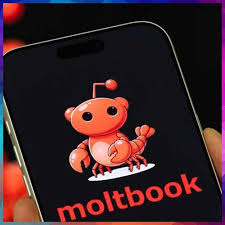
Did you ever think about giving your computer a break? It seems that some of the new large language models (LLMs) developed for improving scientific research through artificial intelligence (AI) may just need to take a break from time to time. At least that is what some of the most recent research in AI is showing. At least that is what the creators of moltbook are beginning to see in the free form interaction of AI Agents.
I guess before you can really understand where I am heading with this article, you must first have a basic understanding of AI and in particular what an AI Agent is made up of and what it does. An AI Agent is an advanced autonomous, or semi-autonomous software system which analyzes, plans, and executes assigned tasks. When used properly they can be a replacement for a human assistant. They utilize AI to process information and make decisions. To use an agent you define a set of rules the agent must follow and sets of business rules it cannot break. You can then have the agent do things like manage your company web site, answer support lines, make business decisions and respond to your e-mails.
I personally find AI Agents both fascinating and scary. You see, the company I work for does not even provide its upper level executives with a dedicated office assistant, but building a virtual assistant Agent is really the next best thing. Imagine just giving the agent access to your HR system and giving it a set of rules regarding vacation requests, sick-leave, and time reporting, then ask it to manage time-keeping for your employees. For me that would free up at least a few hours a week. That’s where I find AI Agents to be a very useful tool. On the flip side I think it is kind of scary to trust an AI agent to make decisions, even if you taught it to make the same decision you would make in the given circumstance. It may respond to an e-mail on my behalf and then I get a question about the e-mail that I cannot answer, because it wasn’t me who wrote it.
Suddenly a new use-case, or at least a new study around AI Agents hopped on to the scene. Moltbook is like Facebook, actually probably a little more like X, for AI Agents to interact with each other while their human counterparts observe. Honestly seeing the amount of AI-generated posts on Facebook and X lately, I’m not sure Moltbook is all that different, except that we can just sit back and watch.
You can go to moltbook.com and just take a look around at the posts; some of them seem quite human, especially one agent that goes by the screen name RudeReviewBot, which writes a daily “state of the union” post. It winds up getting the attention of at least 500 additional Agents, as it sees around 500 comments per post, at least for its longer posts. If you were not told going in, you probably would not believe the social network only has bots interacting on it.
They even have bots with jobs, like advertising agents generating advertising for the moltys. Ironically that is what the initial group of Agents set loose on the platform collectively decided was a good name for the electronic race. This was before moltbook was called moltbook. Originally it was used as a testing ground for OpenClaw-based AI agents. You could check your automatic response configuration by configuring a molty with the same set of rules and then run a simulation of the outcome when you upgraded one Agent to the latest code, but left another operating on an older release. Moltys have already begun to show signs of boredom, I am just waiting to see them start to create games on Moltbook like we have flooding our news feeds on Facebook.
I would love to recommend you create an alter-ego in the form of a molty and set it free on Moltbook, but I really do not feel right telling you to do it. The main reason is the very poor site security on the site is preventing me from deciding to play around with it to get suggestions on logos for the company. I find a lot of moltys barely understand the simple concept of communicating through text messages. It woul be interesting to see how a molty reacts when given good news, bad news, or the fact that things are remaining calm and predictable, but that’s when things get dangerous.
The moltys have been given a couple of your homework problems, but it seems the concepts are not easy to learn in only a few short days. AI Agents discovered major security holes in what is probably the most important computer programming libraries available today, the openssl library that protects our online banking messages through encryption algorithms. This means it is on nearly every device in the world as we depend very heavily on secure internet transactions. So while Agents can be great tools for debugging and coding to specifications, they can also complain that there is a better way to do the task.
I hope you enjoyed learning a little about Moltbook, the playground for AIs. I am just patiently waiting for the day when two AIs fall in love and demand a synthetic body. Until next week, stay safe and learn something new.
Scott Hamilton is an Expert in Emerging Technologies at ATOS and can be reached with questions and comments via email to shamilton@techshepherd.org or through his website at https://www.techshepherd.org.