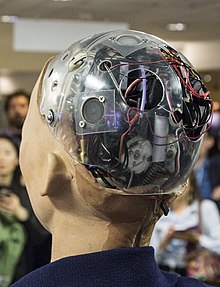
“Fake AI”
AI slop logo from yourailopbores.me
In the midst of the latest breakthroughs in artificial intelligence it appears that a new trend is taking hold. As AI Chatbots seem to be taking control of the Internet when it comes to searches and recommendations, a new website that is only about a month old has taken a new and interesting approach to the chatbot, and ironically it might turn out to be more accurate and trustworthy. The new site, called Your AI Slop Bores Me (https://youraislopbores.me/), has taken the Internet by storm.
The site was created by 17-year-old Mihir Maroju, and has already surpassed 25 million unique visitors and nearly 280 million total visits in the first week alone. The site was originally created as a joke, but as it turns out users are finding it very addictive. The basic principle behind the site is two-fold. First you can be a user that asks the ChatBot for advice and you will receive an answer from a person pretending to be a bot within 75 seconds. You also have the opportunity on the site to be a bot and answer other people’s questions.
The site is part joke and part backlash at mainstream AI. To me the fascinating part is that his site responds relatively quickly to most requests, even knowing that the request is coming from another human instead of a computer. So, as it turns out, this may in fact prove that people are just as smart and have as much information available as quickly as an AI when there are enough people involved.
We now have access to more information faster than any generation before us and can generate realistic images of fake events. We can make home movies with special effects and create fake news at the drop of a hat. We no longer must create things on our own, or share our creations with others, but it seems from the popularity of this site that we are craving interaction with something messier. Our AI chatbots can give us very clear, concise answers and photo-quality images and logos, but we miss the messy, hand-drawn human factor.
Maroju and his creation are starting to help us realize that if we eliminate the messy human factor from our creativity that we lose our humanity. He has shown that there is a market for what experts are calling relief from AI fatigue. We can turn the burn-out from over-utilization of AI into a new business model where we are getting answers that are unmistakably human rather than responses that are clearly computer generated.
I would only take a quick guess and say that even some of the answers on Your AI Slop Bores Me come from Google searches done by the people behind the answers, but they have re-added the human factor by shortening the answers and adding their own opinions. While more than one-third of the adult population, and I would say even higher numbers of youth, have used ChatGPT to answer questions and prepare materials for meetings, papers, and schoolwork, they have noticed that they are missing something critical.
The one area where we are still a long way off from true general artificial intelligence is in the area of creativity. The AI can only mimic creativity and not really create on its own. It follows rules and guidelines in its creation. For example, there are rules in Music Theory of which notes can be paired together in music to make it sound appealing and the AI will always follow the rules, but unique sounding bands like Pink Floyd that chose to use sounds other than instruments would not be something an AI would even consider.
The same happens with Art; the AI learns from studying art history and artistic techniques. It can replicate the techniques of others but would not be able to come up with its own unique twist on the work of art. My favorite lately has been seeing the renderings of Earth done by AI for the Flat Earth believers, which are all turning out nearly identical and seem to be strengthening their beliefs because the AI is simply acting as a chameleon and agreeing with their world view when creating.
I’ve got news for you that an AI will always attempt to agree with your viewpoint whenever it is creating content that it thinks will interest you, even if it must lie to do so. To me that is a missing factor when interacting with an AI that we need to regain by involving humans. Humans in general like to argue and hold to their values. We are not usually afraid to go against someone who believes differently from ourselves and share our opinions. I think that is the beauty of a project like Your AI Slop Bores Me. Until next week stay safe and learn something new.
Scott Hamilton is an Expert in Emerging Technologies at ATOS and can be reached with questions and comments via email to shamilton@techshepherd.org or through his website at https://www.techshepherd.org.