“Water Lawsuit”
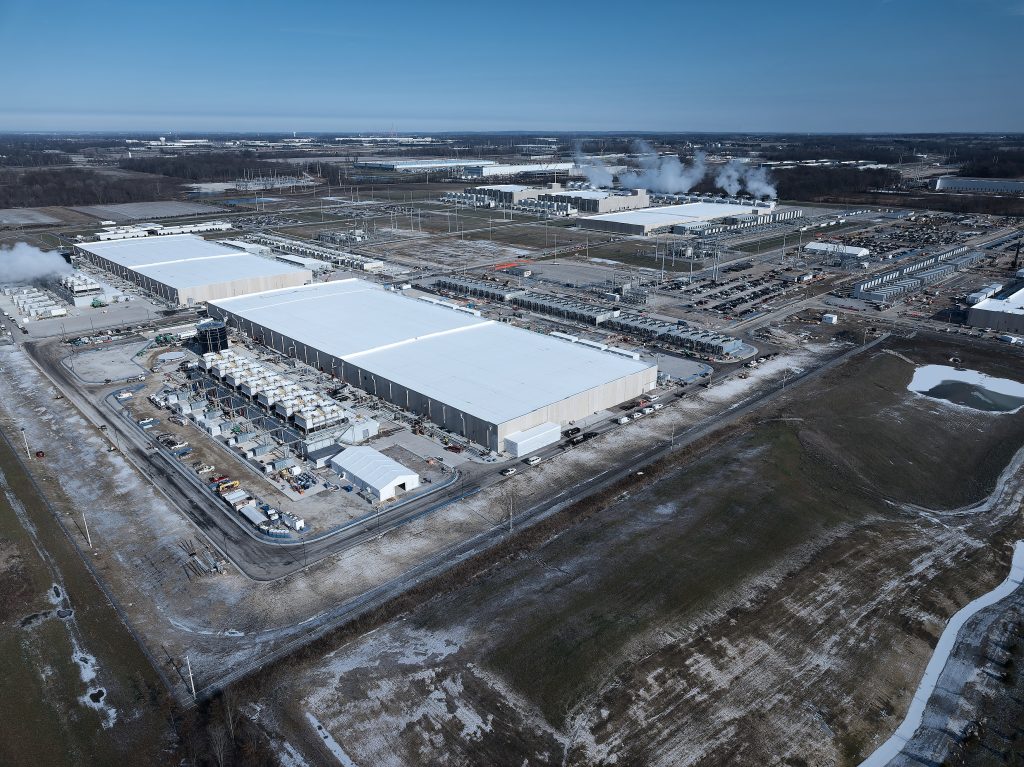
Photo by Google: Another aerial view of our New Albany, OH data center campus in Central Ohio focuses on Building 5, which is in the southwest corner of the campus and is under construction.
I have written several articles about Artificial Intelligence and the data center requirements to run them as well as the impact on society. I still think there are much bigger issues than the water “consumed” by these data centers. However, I came across an article this week that I thought was worth sharing with you. Imperial Valley Computer Manufacturing (IVCM) is in the process of suing the Imperial Irrigation District for access to 750,000 gallons of water a day to sustain their operations.
Let’s start at the beginning of this story, or at least as close to the beginning as I have been able to discover. Sebastian Rucci, the Huntington Beach developer behind the IVCM data center, made claims during the permitting process that the project would rely on reclaimed and recycled water from local cities and not depend on natural supply direct from the Colorado River. In a February 2026 blog post, Rucci claimed the project would be using only wastewater which was planned for disposal only. Their website made claims, “it does not touch a single drop of the Colorado River.”
However, after months of claimed negotiations trying to reach agreements for access to the recycled water in the cities of Imperial and El Centro, they failed to reach an agreement. The plans included proposals to pay for treatment plant upgrades and the pipelines to route the recycled water to the Salton Sea, but they were rejected at every turn. The cities were refusing to give access to the wastewater for ICVM to continue their efforts. ICVM claims that this drove them to a last resort option to save the project.
ICVM requested access to 880 acre-feet of water per year from the Imperial Irrigation District, which was declined by the district. The request was fairly moderate compared to the valley’s over-all agricultural water use. However, what it comes down to is that 880 acre-feet of water is enough to provide water to 7,300 homes for a year.
We tend to think of river water as an unending supply, but that is far from the truth. The Colorado River basin is one of the most strained waterways in North America; with the recent climate changes fueling drought in the area the river is sitting at extremely low water levels. This water is not only used for all the water in the valley, but it is responsible for power generation.
It is unfortunate that the Imperial Valley was chosen for the site of a massive AI data center which will have impact for decades to come, not just the next few years. The IVCM project will have a major impact on water levels in the Colorado River, but also create a decline in hydroelectric generation upstream.
You can easily add to the issues involved with large AI data centers; the first two which we all hear about nearly every day are the impact to the water supply and the impact to electrical power availability. However, there are quite a few other drawbacks for data centers across the nation.
First off these data centers are generally not built for aesthetics, but purely for function. A data center anywhere near your home will ruin your chance of seeing natural beauty. It is all sitting under pavement and buildings. Put simply, data centers are ugly and certainly don’t belong in rural areas, ruining the hunting, fishing, and wildlife observations. A second issue is that they produce an extreme amount of noise in the surrounding area, both audible noise and electrical noise.
I think this is one of the first data center projects facing a legal battle to continue the project, and nearly all of the issues brought to the attention of the courts is access to area resources (water and electricity primarily). In this case we begin to see the numbers required to keep a data center running successfully. Arguing that 750,000 gallons a day is an insane level of water usage is an understatement. In desert data centers, this massive volume simply evaporates to cool servers, meaning it’s completely stripped from the local watershed and never returns. We won’t know the outcome of the lawsuit for a while, but it does give us something as citizens to complain about and argue to avoid data centers building in our area. Until next week, stay safe and learn something new.
Scott Hamilton is an Expert in Emerging Technologies at ATOS and can be reached with questions and comments via email to shamilton@techshepherd.org or through his website at https://www.techshepherd.org.