“The Memory Crisis of 2026”
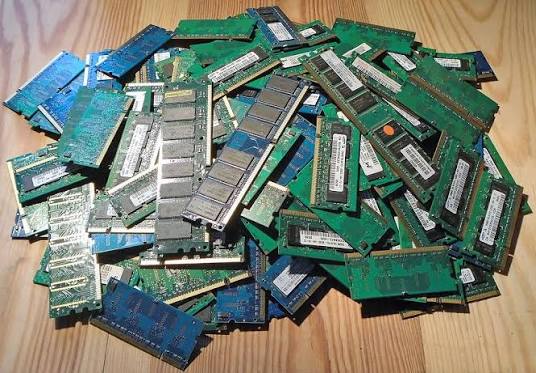
Photo generated by ChatGPT. A pile of DDR Memory chips.
When is the last time you priced a computer upgrade? Have you noticed that even the once cheap $150 Chromebook laptops now have a price tag around $350? If you think like most people you are thinking it is caused by general inflation rates. However, you would be wrong. In the last year the large demand for high-bandwidth memory used by Artificial Intelligence systems has vastly increased in demand. Every time you use Google’s AI search, or Microsoft Co-pilot, or shop on Amazon and see the purchases recommended for you, you drive the price of computers up.
You see as more and more companies and individuals begin to use AI, the need for more computers to meet demand grows. We have seen an exponential growth in the use of AI over last year and as a result the AI companies have started to build new datacenters. All these new datacenters require more computers and all these computers require more memory. They require the more expensive high-bandwidth memory and the manufacturing facilities for computer chips are under unprecedented workloads.
So let’s just imagine for a minute that you own one of these factories and Google reaches out to you and says they need $25 billion worth of high-bandwidth memory for their new datacenter opening next month, but your factory is busy manufacturing memory for home computers at a value of $4 billion. Admit it, you would immediately stop production on the lower cost and lower profit home computer memory product and immediately begin filling the large order for Google. So what does that do to the home computer memory supply?
You see this is exactly what is happening today. The factories are opting to produce more of the high-bandwidth high profit memory rather than the lower profit home computer memory. Honestly as far as materials go the cost of both to the factory is about the same. This is reducing the amount of available memory for home computers and if you remember from your high-school economics class, there is a law of supply and demand. If the demand suddenly becomes higher than the supply, the price of the product will increase. People that really want or need it will pay a premium price to get one or more of the few remaining products. This is what is currently happening in the computer memory industry. Demand is much higher than the supply and even higher than the factories are capable of supplying. This is resulting in some of the largest price increases on computer components in history.
In the past twelve months computer memory prices on average have increased by nearly 500%. Memory chips that last October were selling for $100 are now nearly $500. As it turns out every other component of the cheap Chromebook laptops has remained fairly constant, but the 16GB memory chip in the system has gone from a cost of $50 to $225, driving the cost of the computer up accordingly. In the case of the Chromebook or even a more expensive gaming computer platform, the percentage of the overall cost increase was not really too much, somewhere around a 25% increase in total cost. Where it really starts to cause problems is in the enterprise business systems.
Last year an enterprise business database server with 48TB of memory was in the price range of $500,000 where $300,000 was spent on the memory. The same system today will cost you $1.5 million and $1.2 million of that is spent entirely on memory chips. Let’s face it, while AI may be reducing the workload on staff, and maybe even decreasing the number of staff needed in some areas of business, the overall cost of doing business is on the rise, especially if you are running a business dependent on large database systems. There have been predictions that AI can save the economy by reducing human workload and some people are even making claims that we will no longer have to work in ten years because AI will do it all. However, I think they are missing an important point in those predictions and that is the cost of maintaining the AI equipment. We are on an unsustainable and slippery slope that can only end in failure. We cannot keep up with the demand for computing systems and power requirements to keep pace with the growth of AI. It is just a matter of time before the scale of the economics behind the AI boom fail and we see a bust like we saw in the early days of the Internet. Until next time, stay safe and learn something new, and I hope you will see me online at https://www.techshepherd.org.
Scott Hamilton is an Expert in Emerging Technologies at ATOS and can be reached with questions and comments via email to shamilton@techshepherd.org or through his website at https://www.techshepherd.org.