“AI Trust”
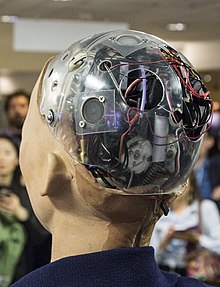
Image from wikipedia https://en.wikipedia.org/wiki/File:Sophia_at_the_AI_for_Good_Global_Summit_2018_(27254369807)_(cropped).jpg of Sophia during the global AI for Good summit.
I have been suspicious for years of anti-virus companies, having a deep feeling that they are also behind the creation of the viruses they are designed to protect us from. I have good reasons for those suspicions as I have followed Internet security for more than three decades and even held jobs as a network security analyst. Over the course of my career, there have been way too many occurrences of anti-virus updates coming out to detect viruses that have only been discovered days before. It seems to me that a professional hacker creating a virus would find better ways to hide it from detection. A letter that was released and signed by several Artificial Intelligence (AI) companies in the past week has led me to realize that this feeling is likely the truth.
In the last week, all four major U.S.-based AI companies—Anthropic, Meta, Alphabet and Microsoft—signed a joint agreement to assist one another in developing AIs for performing network security protection from other AIs designed to find vulnerabilities in software. So let me get this straight, they are admitting that they are designing AI based systems capable of breaking into and creating damage to competing companies’ computing systems. They are also admitting that they are working on AI systems to protect against such attacks. This is where it gets crazy and in my opinion mirrors what the anti-virus companies have been doing for decades. They have made promises to monitor the use of their AIs and report any third parties who abuse the system by attempting to use the AI for hacking.
Let us put this into perspective, they are designing highly capable vulnerability detection systems that look for open security holes in software, hardware and web services. They are blocking the ability of anyone outside of a select set of customers to utilize this functionality and then billing everyone else for utilizing the same AI to block attacks from itself. You know full well that they will use their own AIs against competition and for monetary gain. They will make money from developing attacks based on software vulnerabilities and then make even more money selling the fixes to protect against the very vulnerability they worked to expose.
I can’t help but think that this would be like paying the thief to install an anti-theft alarm in your house, allowing him full access to your house to install the alarm, camera and motion sensors and giving him access to the alarm system to perform maintenance, all to protect yourself and your belongings from himself. We are living in very dangerous times, especially when it comes to online security of our data. I really believe this is the reason why we are beginning to see a resurgence in classic computing platforms that are incapable of being online in any modern way. I am seriously considering using my classic Commodore 182 from 1984 for anything I want to keep private, because I am not even certain with the influx of AI into every facet of computing that it is possible even with open source systems to keep my data private.
I have always said don’t put anything online you would not want to see plastered on a billboard, because once you release it to the Internet, whether it be a private e-mail, a secure chat, a photo, a video, or a post on Facebook, you can never get that information back out of the system with 100% certainty. It will be there forever with no promise that it won’t someday be exposed. So be safe out there, especially with the AI watching.
Until next time, stay safe and learn something new. Farewell for now and I hope you will see me online at http://www.techshepherd.org.
Scott Hamilton is an Expert in Emerging Technologies at ATOS and can be reached with questions and comments via email to shamilton@techshepherd.org or through his website at https://www.techshepherd.org.