How Small Businesses Can Win Online by Outsmarting Big Competitors
Choosing between Edge and Cloud AI is a strategic business decision that dictates your system’s speed, privacy, and reliability. While edge AI offers immediate, offline responsiveness on the ground, the cloud provides the muscle for massive scale and central management. The smartest approach is a hybrid model by filtering data locally at the edge and enriching it in the cloud to put computing power exactly where the decision needs to happen.
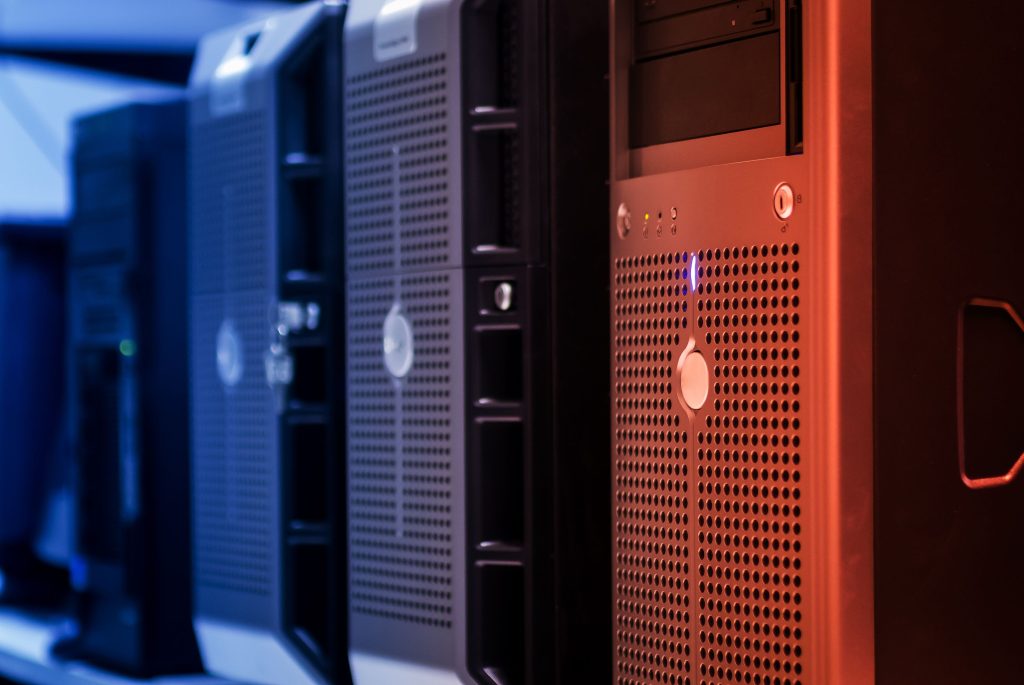
For CIOs, operations leaders, and product owners shaping enterprise AI strategy, one decision quietly drives everything else: AI computing locations. The core tension is real, pushing intelligence to devices can improve speed and resilience, while centralizing in the cloud can simplify scale and control, and the wrong choice can raise cost, slow customer experiences, or expand compliance exposure. Edge AI vs Cloud AI is less a technical debate than a set of business AI architecture decisions that determine what happens when networks fail, data gets sensitive, or demand spikes. Clarity on this choice makes AI deployment impact predictable.
Understanding Edge AI vs Cloud AI
Edge AI runs models on or near the device that collects data, like a camera, sensor, or machine controller. Cloud AI runs models in shared infrastructure, using remote data centers you reach over the internet. The key differences are where computing happens, how fast you need answers, and what happens when connectivity is weak.
These choices shape everyday results: response time, uptime, data exposure, and how easily you can scale to new sites. Edge can cut latency and keep working offline, but hardware and updates are harder to manage. Cloud can scale faster and centralize control, yet network delays and data movement can raise privacy and cost concerns.
Think of Edge AI like a smoke alarm deciding locally in seconds. Cloud AI is like sending signals to a control center that can coordinate many buildings. Both work, but the best fit depends on speed, connectivity, and how sensitive the data is. With those tradeoffs clear, an edge use case shows how on-site analytics turns raw signals into action.
See How On-Site Data Becomes Real-Time Edge Intelligence
Once you understand how location affects latency, connectivity, and control, it’s easier to see why some AI workloads work best where the data is created. Modern on-site data-intelligence setups run data processing, analytics, and machine learning directly at the edge, turning raw local signals into immediate, actionable insight. Instead of shipping every event to a distant data center, these systems can respond in real time, reducing latency and keeping performance steady even when connectivity is limited or inconsistent.
That local-first approach also improves reliability: decisions don’t have to pause while a network link recovers. Just as importantly, it strengthens data sovereignty by keeping sensitive or regulated data on-site under your governance rather than relying on a cloud-only path. Solutions built around edge computing for data intelligence show how edge AI can deliver fast, dependable intelligence where it matters, while still pairing smoothly with cloud AI for centralized training, aggregation, and fleet-level visibility in a balanced hybrid architecture.
Edge AI vs Cloud AI Options at a Glance
This table compares common deployment strategies so you can match technical needs to the right place for each workload. Use it to weigh latency, bandwidth, cost, privacy, reliability, scale, and how often models must change before you commit to an architecture.
| Option | Benefit | Best For | Consideration |
| Edge-first inference | Fast local decisions; reduced bandwidth use | Safety, quality checks, real-time control | Limited computing; updates require fleet coordination |
| Cloud-first inference | Elastic scaling; centralized monitoring | Non-urgent analytics, bursty demand, experiments | Network latency; ongoing data transfer costs |
| Hybrid: edge inference + cloud training | Quick responses plus stronger models over time | Fleet devices improving from shared learnings | Integration complexity; clear data contracts needed |
| Federated or privacy-preserving learning | Keeps raw data local; reduces exposure risk | Regulated data, sensitive environments | Harder debugging; uneven device capabilities |
| Tiered processing (filter at edge, enrich in cloud) | Cuts noise locally; deeper analysis centrally | Sensor streams, video triage, anomaly pipelines | Requires tuning thresholds and observability |
Edge vs. Cloud AI: Common Questions Answered
If you’re still weighing the trade-offs, these answers can help.
Q: What usually costs more, edge AI or cloud AI?
A: It depends on whether you pay more for devices upfront or for ongoing compute and data transfer. Edge can reduce bandwidth bills, but you may need more capable hardware and a rollout process. Start by estimating monthly data egress plus cloud inference, then compare it to upgrading a small pilot fleet.
Q: How do I keep data secure when using both edge and cloud?
A: Treat the boundary as a contract: define what leaves the device, when, and why. Keep sensitive raw data local when possible, send only features or alerts, and encrypt data in transit and at rest. A simple next step is creating a data classification list for each sensor or input.
Q: How hard is it to maintain models on many edge devices?
A: The hardest part is coordination, not the model file itself. Plan for staged releases, rollback, and device health checks so you can spot failures quickly. Use a single source of truth for model versions and configuration.
Q: Can I integrate edge and cloud without overengineering?
A: Yes, if you keep interfaces simple: define inputs, outputs, and latency targets, then log the same identifiers end to end. Start with “filter at the edge, enrich in the cloud” using conservative thresholds, and tune only after you have real observability.
Make the Right Edge, Cloud, or Hybrid AI Tradeoff
Teams often get stuck between needing fast, reliable on-device inference and needing the scale and flexibility of centralized training and management. A hybrid-ready AI architecture decision mindset helps by starting from constraints, latency, connectivity, privacy, update cadence, and budget, then mapping workloads to where they fit best: Edge AI benefits include low latency, offline resilience, and reduced data movement, while Cloud AI advantages include elastic compute, simpler orchestration, and richer monitoring. Put computers where the data and decisions need to happen most.
Image via Pexels