“Food or Data”
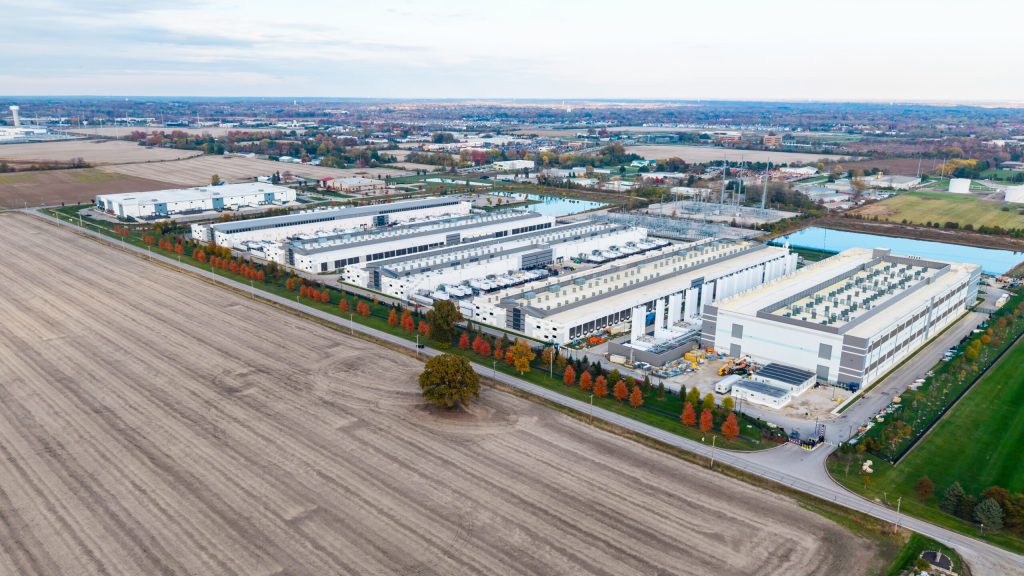
Continuing on from last week where we saw that President Trump is fully backing the “Super Intelligence” market strategy, I would like to take a look at the growth of new data center projects in the United States and its impact on our already stressed power grid. I started researching where new data centers are planned in regards to the power infrastructure and find it interesting that most of these new data center projects are not based where it is convenient for the power grid, but rather where the land is cheap and the population is less dense. I hope I am wrong about my thoughts on it, but I feel like it is done because of the way our states manage such infrastructure problems. It is a statewide vote on allowing these data-center projects and if they are located outside of the big cities, the vote will go in their favor. The big cities want the jobs linked to the data-centers, but don’t want the impact to their local infrastructure, so they will gladly vote for data centers in rural areas.
There is a consistent report of new data centers being built in rural areas. Sixty-seven percent of the planned data centers are in rural areas compared to only thirteen percent of existing data centers being located in rural areas. These percentages are based on all planned facilities, while some are still in negotiation and facing struggles with zoning and local legislation attempting to prevent their construction. I don’t think we realize just how much land is required for these data centers and the impact on both our food and fuel supply. Each of these planned major data centers require between 500 and 800 acres of land and the majority of these rural data centers will be built on acquired farmland. The total land area requirements for the data centers planned in the next five years is in the tens of thousands of acres.
So let’s just do a little exercise and assume that only corn is grown on the acres being consumed by these data centers. The average acre of land can produce 150 bushels of corn, and this is at the lowest levels of production; some land is capable of producing much more, up to 220 bushels per acre. What this means is that if we take the lowest number and say 10,000 acres displaced for data centers, we will reduce corn production by 15 million bushels. This is where it gets scary to me, and obviously we are not just taking corn fields for data centers, but this is actually equal to 10% of our annual production. I really don’t believe anyone is thinking through the total impact of these rural data centers.
Just with a quick analysis, while it seems wise initially to provide our country with adequate computational power to stay in the super intelligence race, we need to look at the overall cost. We are looking at losing $62.25 million worth of corn production whereas the planned datacenters are looking at profits in the billions of dollars. However, we need to look at the long term costs. On average a data center lasts about ten years at most before it is obsolete and needs to be either revamped or completely rebuilt. The fear I have is that we will repurpose this farmland for data centers that will be abandoned buildings in ten years or less. Removal of the buildings will just leave us with unusable land due to soil contamination and just general soil loss from the construction.
We are already seeing supply chain issues impacting the food supply; this is the first year I can remember having to pay more than 25 cents an ear for corn and the lowest I have personally seen it this year is 50 cents per ear, making it double the rate of prior years. What is this decrease in production going to do to our overall food costs? As corn production decreases we will see an increase in the cost of beef, pork, chicken and eggs as they all depend on corn for production. I fully expect to see our cost of living vastly increase, while the pipe dream of Super Intelligence is to improve both our economy and quality of life. How can we expect an improved economy and quality of life if we are consuming our farmland and lowering our food production to increase our computational power? Which is more important to you, the ability to purchase food or browse your social media accounts and play your video games?
I hate to break the news to those in charge, but a majority of the use cases behind SI and data centers are really centered around entertainment, and very little will result in an improvement in quality of life. The largest datacenters are there to support social media platforms and less for scientific research.
Until next time, stay safe and learn something new, and I hope you will see me online at https://www.techshepherd.org.
Scott Hamilton is an Expert in Emerging Technologies at ATOS and can be reached with questions and comments via email to shamilton@techshepherd.org or through his website at https://www.techshepherd.org.