“The End of an Era”
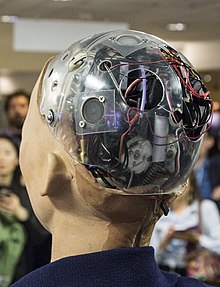
Image from wikipedia https://en.wikipedia.org/wiki/File:Sophia_at_the_AI_for_Good_Global_Summit_2018_(27254369807)_(cropped).jpg of Sophia during the global AI for Good summit.
Last week there was a quiet change that went almost unnoticed, but it ended an era that had lasted two hundred and fifty years. I read about it from another source and was shocked at what I learned, as I am sure you will be as well. There is a phenomenon psychologists call adaptation, which is where when we live alongside something abnormal for long enough, we stop noticing it. That is exactly what is happening at a global level and most of us didn’t even notice.
It was actually first noticed by a group of Christian enthusiasts in 1993, who felt they were standing at the brink of a new world when they first clicked on the Mosaic browser and realized that the world was suddenly a much smaller place. At that time we thought the world was going to change overnight. However, we are now on the verge of something at a fundamentally larger scale.
You see, when the Internet first arrived there was not much centralized control over the content. Web-servers were run by individuals and businesses and it was really very distributed with very little control. The time of limited control is over and whether we want to admit it or not, the Internet controls the planet. We all rely on it for gathering information to make important decisions all the way at the top level of world governments. There are approximately thirty people on this planet right now that in the coming weeks and months are going to be making decisions that will shape the world our children will live in. Guess what, they are not presidents, kings, or emperors. These rulers have silently slipped into the background and become a separate form of headship, much like the King of England who is really just a figurehead for parliament. However, even parliament is a figurehead for the technocracy that really rules our world.
The thirty individuals who own the technology companies and engineering firms that have become household names are now the ones running the show. Leaders from this group have, in just the last month, begun to share out loud the inside thoughts they have always known about Artificial Intelligence. The first to speak out was Jensen Huang, CEO of NVIDIA, a four trillion dollar technology company who is behind the hardware that drives the entire AI industry. He was asked a simple question by Lex Fridman, “When do you think AI will be able to launch and grow a tech company to a billion dollars? In five years? In ten?”
Huang paused for a moment and said, “I think now. I think we have reached AGI.” Just so you know, AGI stands for Artificial General Intelligence, which is about as close to an artificial intelligent lifeform as you can get.
Last week, Marc Andressen, the man who wrote the first commercial web browser in 1993, published a one sentence post. “AGI is already here, it’s just unevenly distributed.”
Dario Amodei, CEO of Antropic, said, “In 6-12 months AI will completely eliminate the software development profession. End-to-end!”
Sam Altman, in an interview with Axios, said “Superintelligence is that close. And it’s not a new technology; it’s a restructuring of society.”
You can argue about the accuracy of definitions, you can speculate that each of them puts something different into the word “AGI.” But what’s more important than any definition is how one analyst put it, and I can’t help but quote him: “The key isn’t whether you agree with the term AGI. The key is that the people closest to the hardware and the actual deployment of technologies are increasingly talking about autonomy not as a research topic, but as a finished product feature.”
Just to show the power of what we are talking about, there is a new product “colleague skill” which is an open source tool that appeared on github March 30. The idea behind the project was to feed an AI chatbot all of an employee’s correspondence, documents, work emails, and screenshots, and the bot would provide an AI agent that writes in the employee’s style, thinks with the same logic, and can even shift blame on issues to fellow co-workers.
In Shandong Province, an HR manager at a major game media company resigned. Within minutes of her resignation, the company created her digital double which appeared in the company chat the next morning. For several hours, her colleagues didn’t realize they were talking to a simulated human. It was not because the digital double was Intelligent, it was more because the human original was well documented.
People have begun to use this tool for themselves and to clean up their online profiles to prevent the tool from replicating them, but the question left for them is if it is too late. The big problem here is that the better you are as a developer, documenting your processes and procedures and providing good comments in your code, showing conscientiousness in your job as a primary virtue is the exact thing that makes you easy to replace. The only saving grace is that while an AI can capture the essence of you and your job, what it cannot do is replicate the intuition at the time the document was written. The point is, it copies answers and decisions, but not the approach to the solution. If you work in any creative environment, you know that moment of silence when you feel something is not quite as it should be and make a last minute change to a design. That cannot be captured and systemized, because intuition cannot be captured. One Chinese analyst put it very accurately, “Whatever the system distills, it’s always just a shadow of the person.” Until next week stay safe and learn something new.
Scott Hamilton is an Expert in Emerging Technologies at ATOS and can be reached with questions and comments via email to shamilton@techshepherd.org or through his website at https://www.techshepherd.org.